My killer plants are giving me flowers

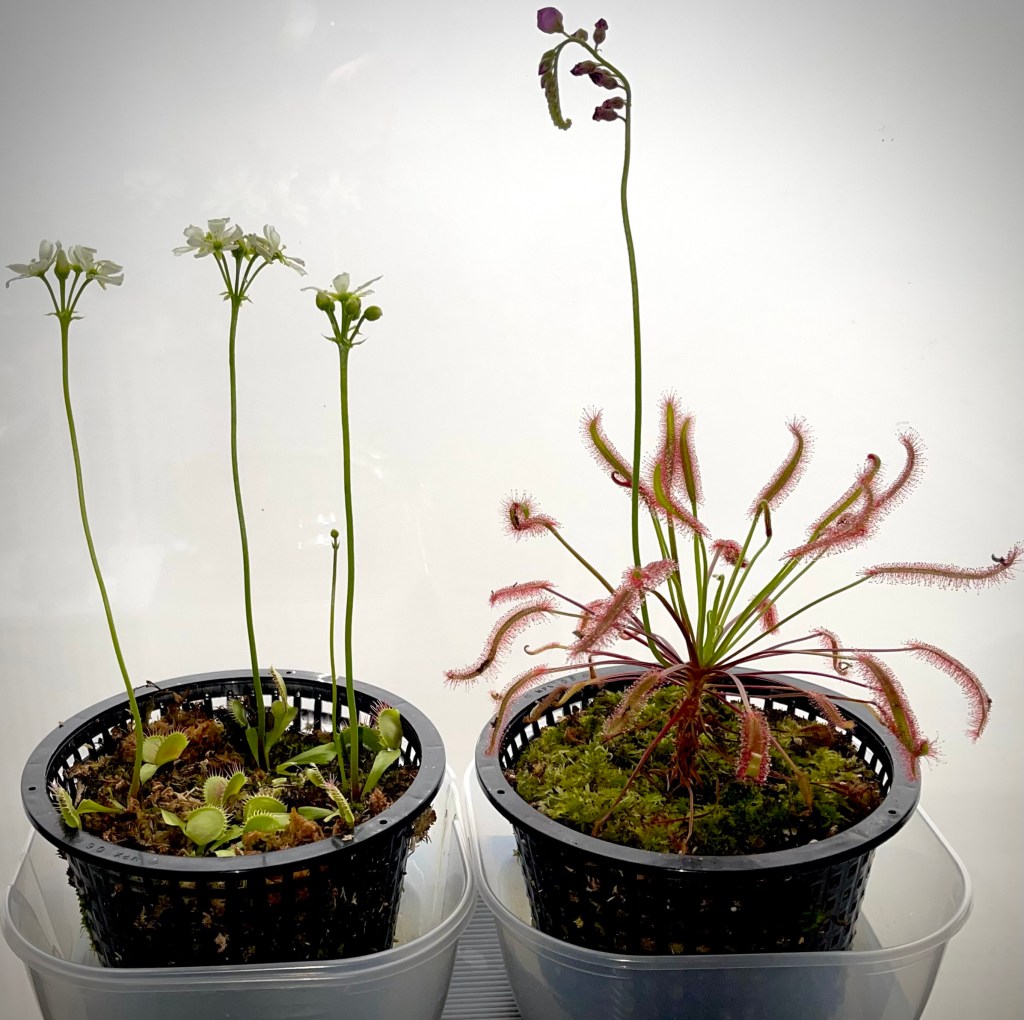
Photograph shows Venus flytraps and a Cape sundew with flowers. Both are carnivorous plants.
My Venus flytraps and Cape sundew are in full bloom. Their flowers perch atop high stalks to prevent pollinators from becoming a meal.

Not to be outdone by Venus flytraps, my Cape sundew also decided to get showy. Unlike the VFTs, which are native to Carolina wetlands and go dormant over winter, my sundew hails from South Africa’s Cape of Good Hope and grows year-round. Although these plants occasionally catch insects, I supplement their diet with freeze-dried bloodworms.

In a hurry? My word search puzzles will satisfy you!

Cover of "Mythology Large Print Word Search for New Solvers of all Ages."

Creating a word search for the activity section of “Agenda 21 Comes to Colorado” inspired me to publish a series of puzzles for new solvers or those who want the satisfaction of completing a task quickly.

My journey into the world of puzzles isn’t new; I used to edit the commuter crossword puzzle for Tribune Media Services (now Tribune Content Agency). This experience gave me an understanding of the allure of easy-to-solve puzzles. They’re not just about filling time; they’re about engaging the mind in a stimulating and relaxing way.

The commuter puzzle was crafted with the intent of being completed during the brief windows of a newspaper reader’s morning or evening commute. It had to be concise, yet captivating, offering a quick but fulfilling mental exercise. This experience taught me the importance of balancing simplicity with intrigue, ensuring that each puzzle could be solved in the time it takes to travel from home to work or vice versa.

Drawing on this background, I aimed to create approachable puzzles that provide a smooth entry point for beginners or a quick solve for the more experienced. It’s a nod to those early mornings spent tweaking clues and grids to fit the fleeting moments of a commuter’s journey, now transformed into a series that anyone can enjoy anytime, anywhere.

Available now in paperback from Amazon.

Can your heart stand the shocking facts about Agenda 21?

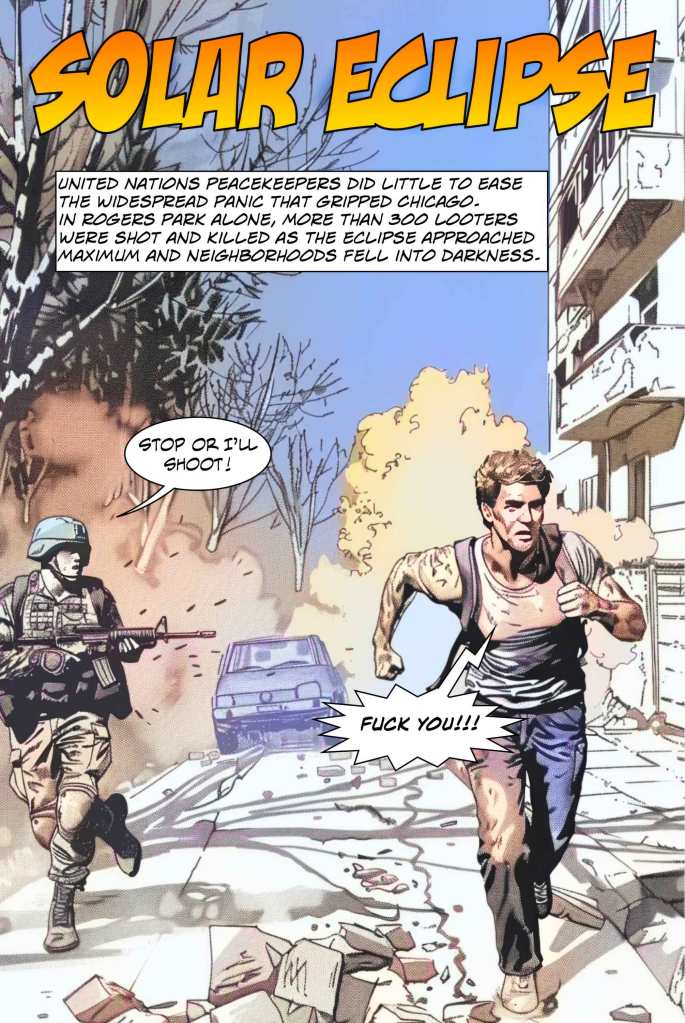
In the style of men's adventure magazine covers from the 1950s-1960s, a United Nations soldier manhandles an attractive blond woman during live-fire exercises in southeastern Colorado.

I’m thrilled to announce that my graphic novel coloring book “Agenda 21 Comes to Colorado” will hit the shelves next month. This isn’t just a book; it’s a revelation, a vibrant journey into the shadowy depths of global conspiracies where truth and fiction blur.

Agenda 21, a plan devised by the United Nations, is often dismissed as a harmless sustainability program. But delve deeper, and you’ll uncover its sinister core: a blueprint for global domination, aiming to usurp national sovereignty and control every aspect of our lives. From the food we eat to the land we cherish, Agenda 21 seeks to redistribute wealth, enforce population control, and undermine our freedoms under the guise of environmental sustainability.

Why are more and more people waking up to the United Nations as a threat to our sovereignty? Because the evidence is undeniable. “Agenda 21 Comes to Colorado” is more than a coloring book — it’s a call to action, a vivid exploration of the encroaching tentacles of global governance cloaked in the benign language of sustainability.

Prepare to be awakened, enlightened, and entertained as you color your way through the veiled truths and dark secrets of Agenda 21. This is not just any graphic novel; it’s a portal to the truth, a visual guide through the murky waters of international politics and covert agendas. Get ready to question, to wonder, and to see the world anew. “Agenda 21 Comes to Colorado” is coming, and the truth will be colored in bolder shades than ever before.

Get your Crayolas ready.

Get my new book!

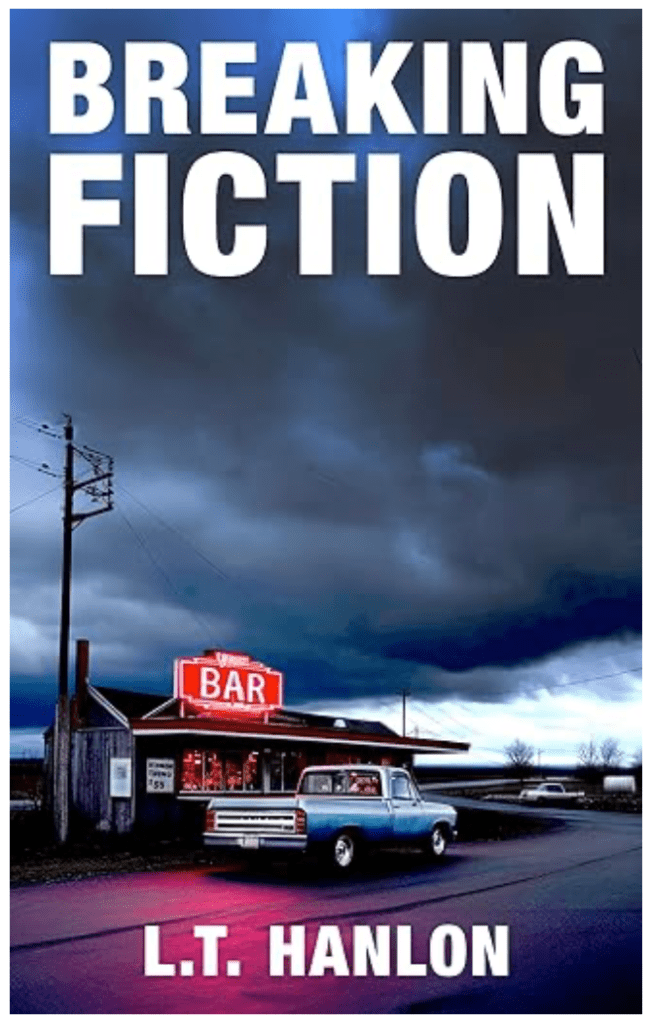
Dive into the depths of “Breaking Fiction,” 35 short stories spotlighting the morally ambiguous. From bikers to killers and counterfeiters to undeniable jerks, this anthology explores the dark corners of human nature. But don’t fret! Sensitive readers will find an occasional Goody Two-Shoes offering a contrasting glimpse of kindness in a doomed world teeming with vice.

With “Breaking Fiction,” I venture into the realm of short stories, drawing inspiration from news headlines that daily weave through our lives. This collection represents more than just a series of narratives; it explores the layers and possibilities beneath the surface of everyday journalism.

Each piece in “Breaking Fiction” extends beyond the straightforward recounting of events, delving into the what-ifs and might-have-beens that news stories often leave to the imagination. Through this work, I offer readers a space to ponder the news’s deeper emotional and societal implications, inviting reflection on how these stories resonate within our personal and collective experiences.

“Breaking Fiction” is available in paperback and as a Kindle eBook.


For St. Patrick’s Day, yellow is the new green

Five college-age men dressed in green for St. Patrick's Day behave suspiciously in a men's restroom.
The scene as recreated by Midjourney.

Ah, St. Patrick’s Day in Lincoln Park: a time of jubilant revelry, emerald-hued beer, and, as I discovered, the most bewildering bathroom antics west of the Emerald Isle. Several years ago, the Chicago Tribune’s Metromix section sent me to capture the essence of a popular nightclub’s annual celebration of all things Irish.

The evening started innocuously enough. The air was thick with the scent of spilled Guinness and the sound of boisterous toasts. Patrons, clad in varying shades of green, from neon lime to the deepest forest, danced and swayed, their movements becoming increasingly erratic as the night progressed — a testament to the barkeep’s generosity.

But the real story, the pièce de résistance of my nocturnal expedition, lurked not on the dance floor but in the men’s room. Here, in the dimly lit, questionably sanitary confines, I stumbled upon a bizarre scene that would make a leprechaun blush.

Arrayed before me, five young men stood in a circle, each with a condom in hand — or, more accurately, in use — apparently competing in some urination challenge. Yes, dear reader, you read that correctly. These lads were filling their latex vessels with a fervor typically reserved for beer pong championships.

As I stood there, one of the participants caught my eye. “Hey!” he exclaimed, his voice echoing off the tiled walls, “It’s not what you think! We’re not queer for each other — it’s just easier to fill piss balloons if you’re kinda hard!”

Weird day in Wyoming still haunts me 50 years on

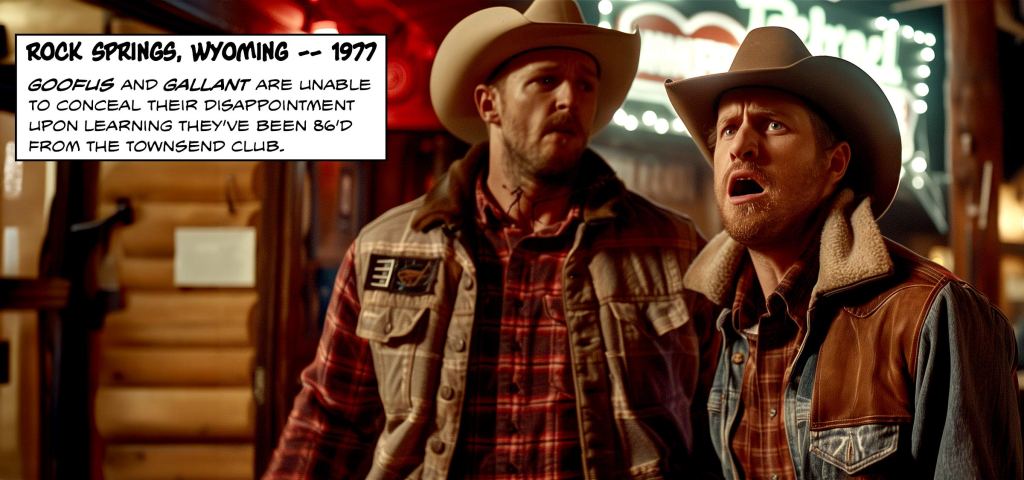
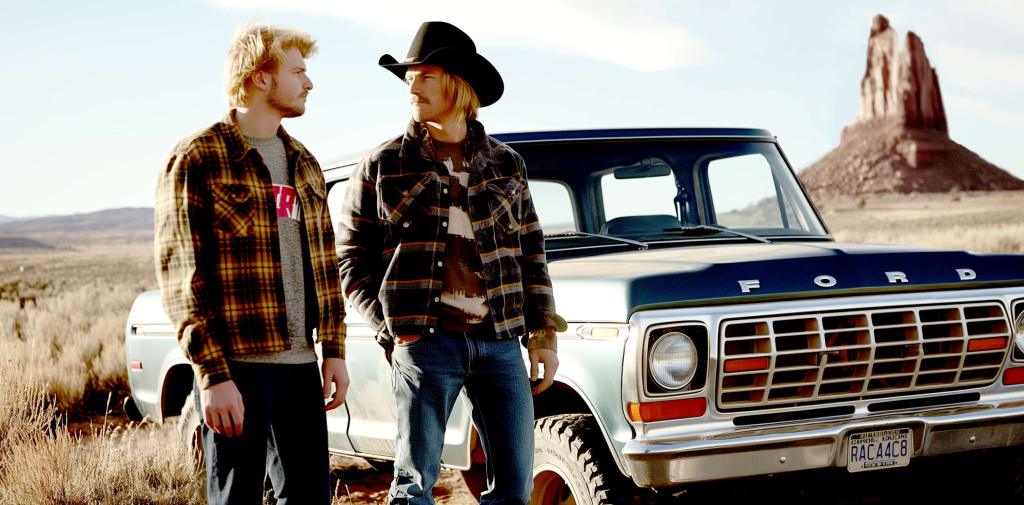
In the 1970s, two young men stand near a Ford truck with Boar's Tusk rock formation behind them.

I grew up in Colorado and spent many years working at newspapers in Colorado, Arizona, and Wyoming. I love the West and hope to retire there someday. The West is in my heart.

When most folks think of the West, they envision a land in which the echoes of homesteaders, cowboys, Indians, and Manifest Destiny still echo. But there’s another side to the West whose echoes you only hear late at night; you’d best listen to these tales with the lights on. Such weird West stories range from legends of cryptids like the thunderbird to accounts of strange doorways into parallel universes.

Tall tales collect a patina of reality out West because so many still lie at the edge of living memory and are told and retold by those who insist they witnessed the events. Besides, as a newspaper editor in John Ford’s “The Man Who Shot Liberty Valance” famously observes, “This is the West, sir. When the legend becomes fact, print the legend.”

A recent series of books by David Paulides of the CanAm Missing Project explores the disturbing possibility that for more than a century, people have disappeared under unusual circumstances in wilderness areas. In his books, Paulides also claims that this phenomenon isn’t restricted to the United States and that clusters of similar disappearances exist worldwide.

I’ve been following his research since discovering Paulides’ books several years ago. I just purchased his latest volume, “Missing 411: The Devil’s in the Detail,” the list of oddities in the Great Outdoors continues as regularly as Old Faithful eruptions.

I’m fascinated by Paulides’ research because almost 50 years ago, I experienced something similar that I still can’t fully explain — and even writing about it now makes me uncomfortable.

Alone in the middle of nowhere

When I worked for the Daily Rocket-Miner in Rock Springs, Wyoming, as a reporter and photographer, I discovered an old 4×5 Crown Graphic camera in a darkroom closet. Our publisher told me I could shoot some test images with it, so I talked a friend of mine into driving me out to Boar’s Tusk. I needed a cover photo for the Progress Edition, and this stark rock formation out in the Red Desert would be good.

My friend Dennis (not his real name) had just bought a Ford Bronco and agreed to drive me out to Boar’s Tusk one Saturday. We’d made it nearly there when clouds began to move in. A thunderstorm was imminent, so I decided to slap on a red filter and grab a few shots of Boar’s Tusk framed by dramatic clouds before the sky opened.

Dennis pulled off the gravel county road, and I set up my tripod, mounted the vintage press camera, and pointed it at the distant remnant of an ancient volcano. I took light meter readings and was about to slide in the film when Dennis approached me, leaned close, and whispered: “Something’s wrong here. We need to get out of here NOW.”

He told me to loudly ask him to return to the truck and get some more film — and that when he’d reached the vehicle, I should quickly fold up the tripod with the camera still attached, carry it to the back of the truck, throw it in, and climb into the passenger side.

That’s what I did. A second after I got in the Bronco, Dennis fired it up and sped out as fast as he could. He didn’t slow down until we were back on pavement at least five to 10 miles away.

I was maybe 22 at the time, and Dennis was in his mid-30s. He was an experienced hunter and outdoorsman who didn’t drink to excess or do drugs.

People were hiding — and watching us

Once he’d calmed down, Dennis told me that a couple of minutes after we got out of the truck, he noticed a disturbing lack of insect sounds — and that in late summer, the place should have been screaming with noise.

What he said next still gives me goosebumps. Dennis said he saw at least two human eyes staring at us.

I told him that was crazy. There was no place for people to hide, and the sparse scrub and sage were maybe three feet tall at most.

That’s when Dennis said the people had been lying on the ground and holding what he took to be rifles.

Dennis drove back to Rock Springs and kept checking the rearview. My friend didn’t want to return to his place, so he spent the rest of Saturday at my apartment. Neither of us could sleep, and although we hadn’t seen anybody following us, at one point, we became convinced “people” were combing Rock Springs looking for us.

Neither of us could get to sleep.

Would authorities think we’re crazy?

By noon Sunday, we still hadn’t calmed down much and thought about calling the police and sheriff’s office. Then, suddenly, we both felt a strange sense of calm and realized that nobody had followed us. We began to consider the possibility that nobody had been out there in the desert watching us at all.

Both of us were starving, and it occurred to me that we hadn’t eaten or slept in more than 24 hours. So we walked over to the Taco John’s just up the street from my tiny apartment. I specifically remember ordering a taco salad, a taco burger, and a large cola.

Neither of us told friends or family about the incident until years later. I’ve since lost touch with Dennis.

As the decades passed, I decided that Dennis and I must have somehow locked our thought processes into some mutual feedback loop that amplified our paranoia into a brief, self-limiting, synchronized psychosis.

Several weeks previously, we had rambling, late-night discussions about the cattle mutilation cases unnerving ranchers across the Rocky Mountain West. I had also recently become obsessed with UFOs reported near Pinedale, Wyoming, and had interviewed the University of Wyoming’s Dr. Leo Sprinkle about his ufology research, which included investigating reports of alien abductions years before the subject saturated the public mind.

In short, we had been constantly talking about weird stuff for a long time. Perhaps a strange spark on a Saturday in the wilderness ignited a brief mental brushfire in both of our minds.

Another possibility is that somebody drugged us, but we hadn’t stopped to eat or drink on our way out to Boar’s Tusk, and we’d only consumed soft drinks from sealed cans stored in a small cooler.

I’ve decided I’ll never determine what happened.

But I’ll tell you this: I’ve never returned to Boar’s Tusk.