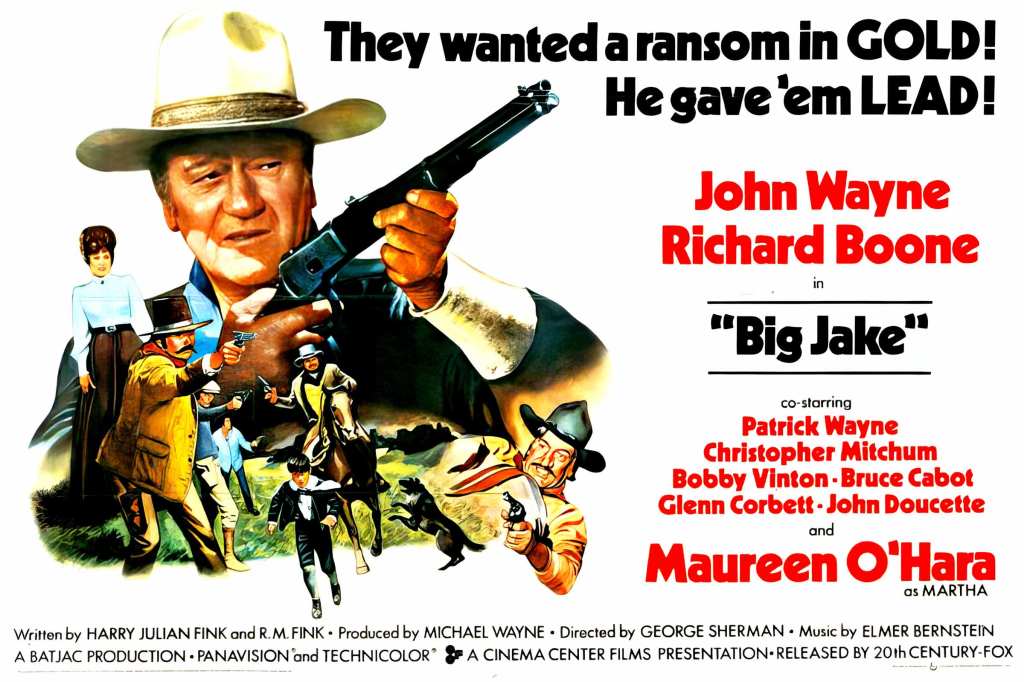
Having watched “Big Jake” for the first time in more than 50 years, its timeless quality struck me. It’s amazing how this 1971 John Wayne classic could easily pass for a modern production, especially considering its graphic narrative and intense action sequences that resonate with the high-amp shocks we adore in Quentin Tarantino movies.
The film spins a riveting tale of child kidnapping, and it doesn’t shy away from brutality, much like the stylized violence we see today. There’s a particular member of the kidnap gang who wields a machete with chilling fondness. The gruesome fate of the Duke’s dog, not to mention a few unfortunate characters, reflects a brand of violence that’s unsettling precisely because director George Sherman leaves much of the violence to the imagination.
Yet, despite the grim elements, “Big Jake” remains a standout Western, thanks to a powerhouse cast including Richard Boone, Maureen O’Hara, and Patrick Wayne. The movie holds its own, even when you put it side by side with other Westerns of its era like “The Wild Bunch” or “Butch Cassidy and the Sundance Kid.” These films, too, pushed the boundaries of the genre, but “Big Jake” has a unique appeal. Its mix of traditional Western tropes with unexpectedly graphic content gives it a distinctive edge.
It’s fascinating to see how this film anticipated the evolution of cinematic storytelling, embracing a rawness and directness that would become the hallmark of later directors.
In revisiting “Big Jake,” I’ve rekindled memories of the classic Western era and gained a fresh appreciation for its forward-thinking approach to storytelling and visual style.
 L.T. Hanlon
Better give me the Greener – my eyes aren’t so good anymore..
LikeLike