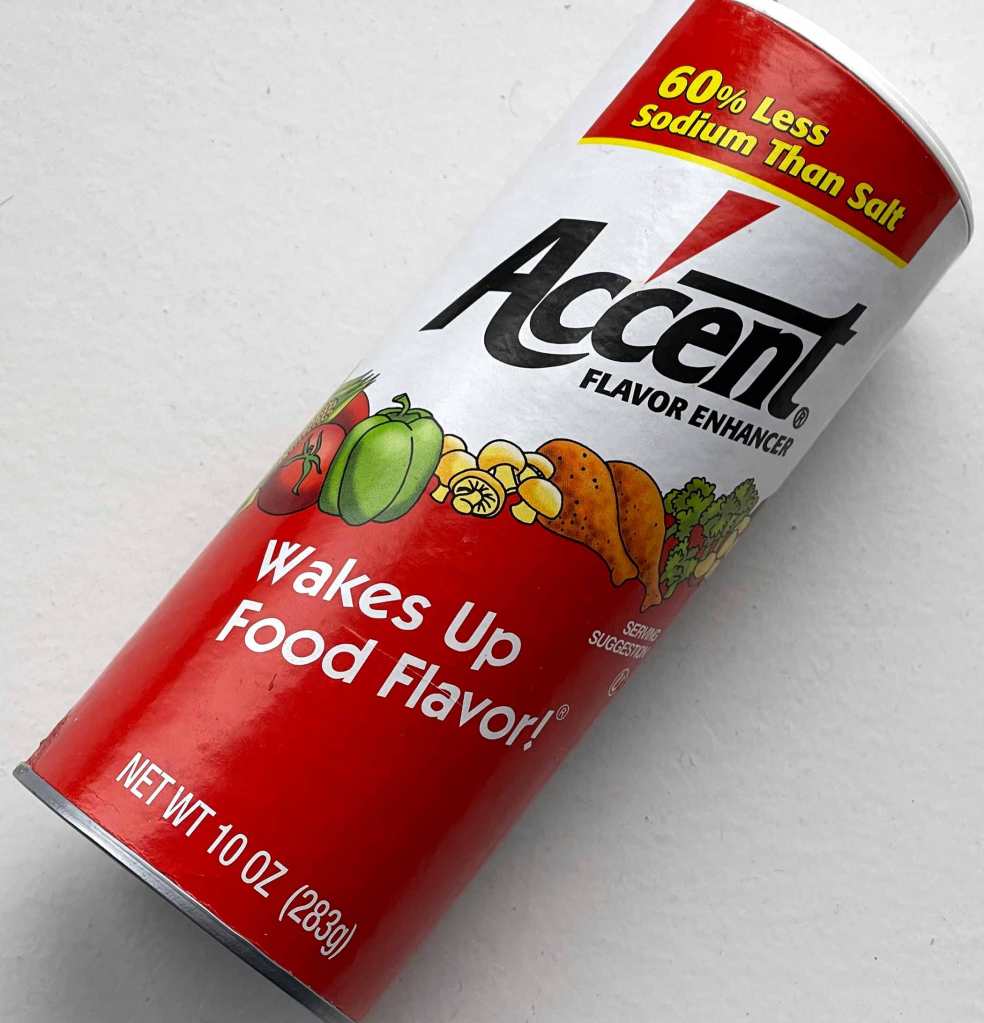
Taste the magic of monosodium glutamate!

Container of Ac'cent brand monosodium glutamate.

Monosodium glutamate, commonly known as MSG, has long been a subject of culinary debates, often misunderstood and maligned. Yet, this seasoning, heralded for its unique flavor-enhancing properties, deserves a moment in the spotlight for its fascinating history and culinary significance.

My journey with MSG began in childhood. The celery in the chicken chop suey at Chinese restaurants always had an irresistible taste that our home-cooked meals couldn’t match. The secret ingredient? MSG. It was a revelation when my mother introduced Ac’cent, a famous MSG brand, into our kitchen. Suddenly, our dishes were transformed, brimming with an indescribable savory depth.

MSG’s history dates from 1908, when Japanese chemist Kikunae Ikeda identified the unique taste of kombu seaweed broth. He named this taste “umami,” which translates to a pleasant savory flavor, and it is now recognized as the fifth taste alongside sweet, sour, bitter, and salty. Ikeda’s discovery helped to produce MSG, derived from natural substances like sugarcane or beets, through a fermentation process like yogurt or vinegar.

Despite its natural origins, MSG has been a controversial ingredient. In the late 1960s, “Chinese Restaurant Syndrome” emerged, describing symptoms people attributed to eating food with MSG, particularly in Chinese cuisine. This led to widespread stigma and unfounded fears about MSG’s safety. However, decades of research have discredited these claims. The U.S. Food and Drug Administration and many scientific studies have affirmed MSG’s safety, debunking the myth of Chinese Restaurant Syndrome just as the alleged dangers of salt have been reassessed.

MSG’s ability to enhance flavor without adding saltiness is a culinary game-changer. It has a unique capacity to balance and round out the overall perception of other tastes. MSG is a magical ingredient for those who love to cook. Whenever I reach for salt, I choose a sprinkle of MSG instead, knowing it will elevate the dish to a new level of deliciousness.

It’s important to note that MSG imparts the umami taste, a profound, brothy, and meaty flavor that brings complexity to dishes. This “fifth taste” is why foods like tomatoes, cheese, and mushrooms are so satisfying. MSG replicates and intensifies this natural umami, making it an invaluable tool in the kitchen.
Next time you’re seasoning your meal, consider reaching for the MSG – you might be surprised at the depth of flavor it adds to your culinary creations.

WANT TO KNOW MORE?

How MSG got a bad rap: Flawed science and xenophobia

The strange case of Dr. Ho Man Kwok
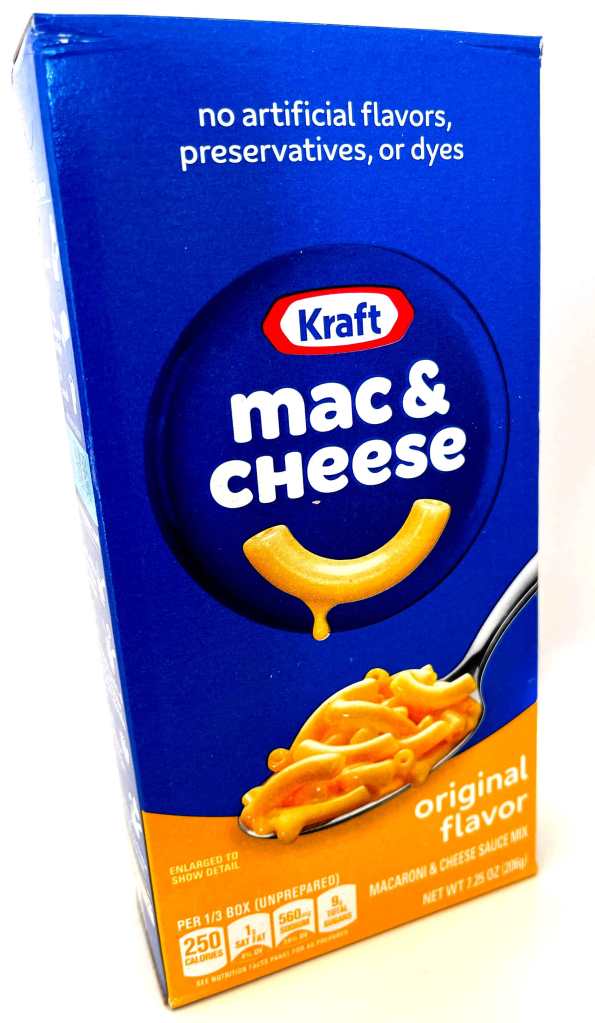

The new Kraft Mac & Cheese packaging sucks

Photo of a new box of Karft Mac & Cheese.

As a long-time fan of Kraft Macaroni & Cheese, I feel compelled to voice my thoughts on their recent packaging redesign. Change is inevitable, but sometimes, it doesn’t sit right, especially when it alters something as iconic as Kraft’s packaging. Here’s my take on the new look and why it misses the mark for me.

Firstly, the revamped Kraft logo. The shift to lowercase letters might seem like a minor tweak, but it’s a significant departure from the brand’s heritage. There’s something about the original, all-caps KRAFT that exuded a sense of reliability and tradition. This new, softer version feels like it’s trying too hard to be modern and approachable, losing a bit of its identity in the process. Seeing a brand with such a storied history feel the need to downplay its legacy in pursuing trendiness irks me.

Speaking of tradition, I’ve always appreciated how the product was officially named “Kraft Macaroni and Cheese Dinner.” It’s a nod to the product’s long-standing place in American culinary culture. This subtle acknowledgment of its roots added a layer of authenticity to the brand. Changing or simplifying this feels like a disconnect from the tradition that made Kraft a household name.

Moving onto the actual product, the cheese sauce now looks too gooey for my liking. There’s a fine line between creamy and overly viscous; unfortunately, the new visual representation crosses that line. It doesn’t evoke the same comforting, homey vibe the previous version did.

And now, the elephant in the room: the powdered cheese. It’s no secret that Kraft has been stingy with the cheese included in each box. What’s more, Kraft sells its powdered cheese separately, suggesting various uses like sprinkling it on salads or popcorn – but curiously, not for beefing up their own Mac & Cheese. This omission feels like an almost tacit admission of the inadequate cheese quantity in each box.

In my household, this has led to a guilty secret: the occasional swiping of a cheese packet from a second box, a habit that used to drive my mom to distraction. It’s a small act of rebellion against what feels like a cost-cutting move that detracts from the enjoyment of the product.

In conclusion, while change is a part of growth, the new Kraft Macaroni & Cheese packaging feels like a step away from what made the brand a beloved staple. It’s a shift that seems to prioritize modern aesthetics over substance and tradition, and frankly, I’m not a fan.