The Oshkosh Northwestern — August 17, 1978
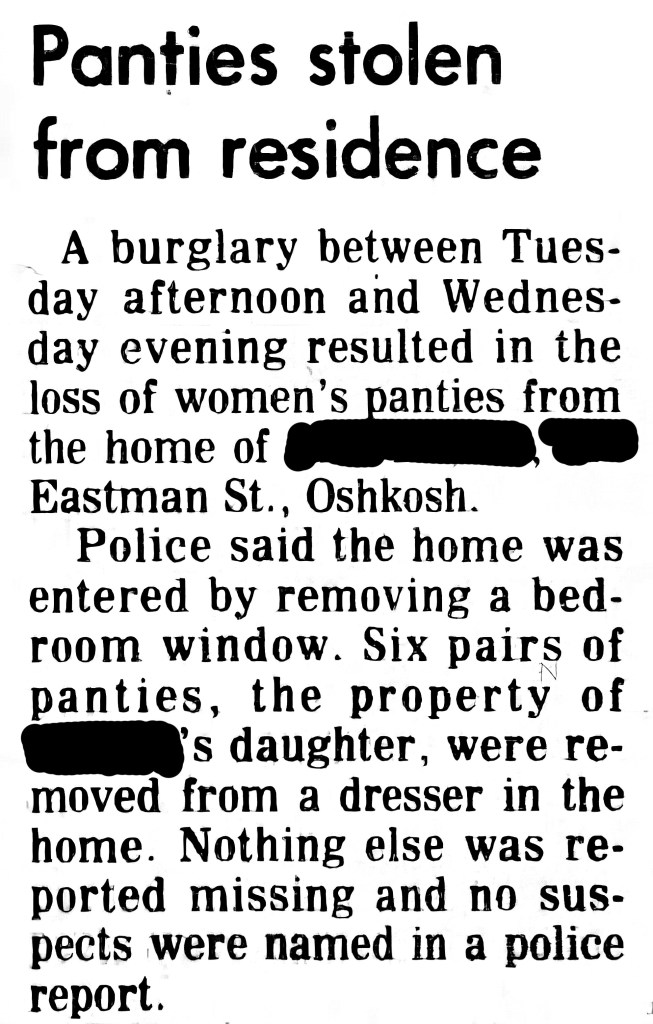
The Oshkosh Northwestern — August 17, 1978
The Vancouver Sun, British Columbia — April 4, 1955
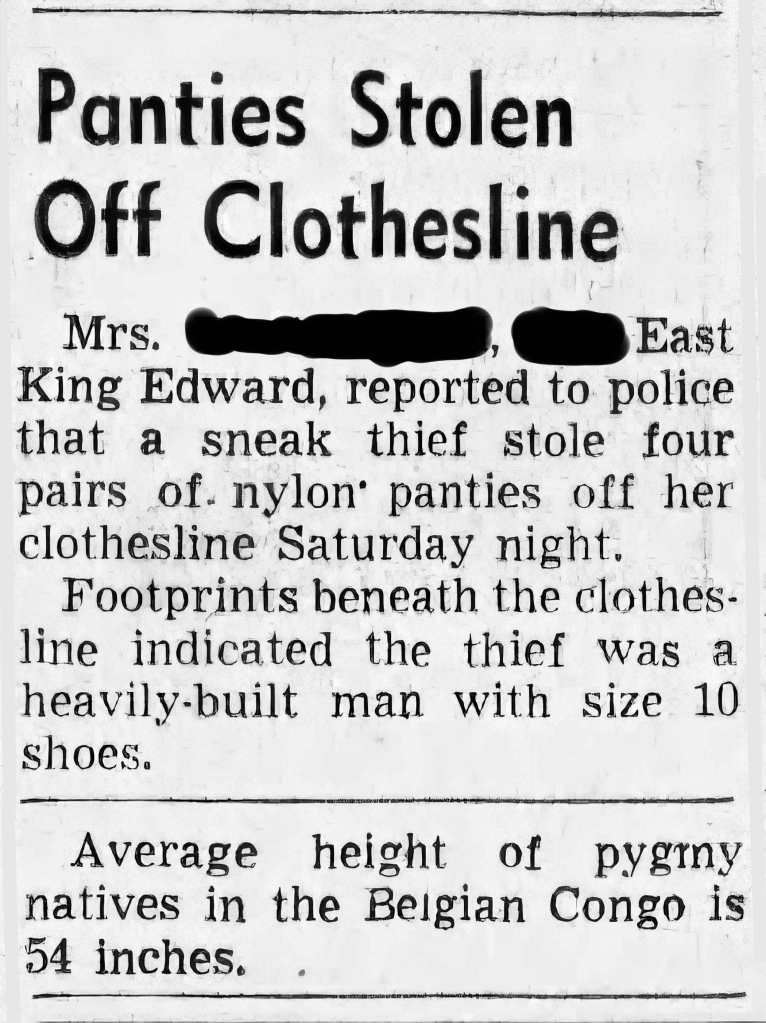
The Day, New London, Connecticut — December 19, 1953

In bizarre and often peculiar crimes, one category has consistently piqued my curiosity: panty banditry.
You might wonder why these seemingly trivial incidents have captured my attention, and I’m here to shed some light on this peculiar fascination.
It all began during my early days working for a Denver-area weekly newspaper in the mid-1970s.
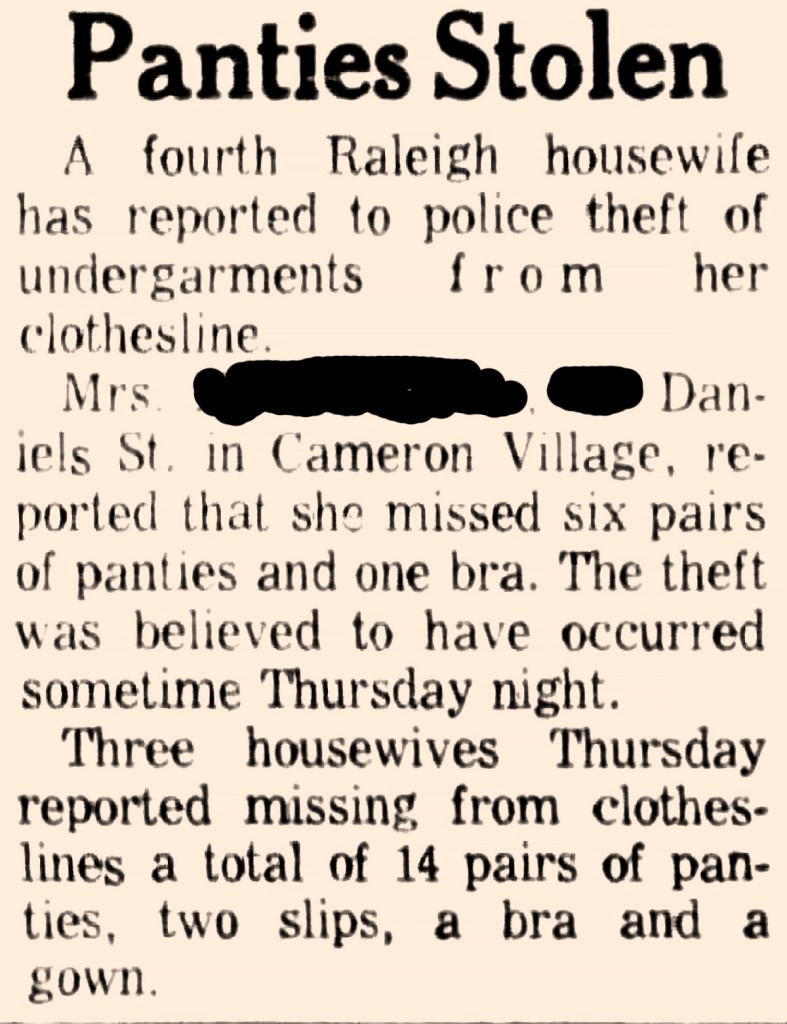
I had just started my career in journalism, and my responsibilities at Sentinel Newspapers’ Aurora and Southeast Denver editions included compiling the police blotter. A peculiar trend emerged amid the usual incidents of petty theft and minor misdemeanors: reports of someone stealing pink panties from apartment complex laundry rooms.
One day, my editor, a no-nonsense woman who’d worked with Gannett’s Al Neuharth, casually asked if the cops had referred to the suspect as the “Pink Panty Bandit” yet. My answer was affirmative, and she promptly instructed me to adopt the same terminology in writing up the police blotter.
Thus, the legend of the Pink Panty Bandit was born.
What intrigues me about panty thefts is that, to this day, they are not taken as seriously as they should be. A quick dive into newspaper archives reveals a troubling pattern that a handful of these panty bandits often commit more serious offenses. It’s a disturbing trend that underscores the importance of not dismissing these seemingly harmless crimes.
Today, journalists take great pains to avoid identifying crime victims, but that wasn’t the case in days gone by. A typical item about panty banditry would report victims’ names, exact addresses, and even their daily routines. “The victim, Betty Smith, 27, a registered nurse who lives at 123 Main St., told police she lives alone and discovered the panties stolen upon returning from working the late shift at Happy Valley Community Hospital.”
I redact most of this identifying information when displaying panty theft stories.
What’s equally interesting is the apparent gender bias in these crimes. I’ve scoured countless archives, and I’ve never come across a report of a woman stealing panties or men’s underwear.
Not only is panty banditry a uniquely male pursuit, but it peaked in the 1950s. In later years, the crime’s decline coincided with the widespread adoption of dryers, replacing clotheslines for laundry drying.
The allure of panty banditry lies in its peculiar nature, the bizarre alias, and the intriguing patterns that emerge from these small newspaper articles. It’s a window into a world where the most mundane crimes can carry unexpected weight and where the past holds secrets and lessons waiting to be uncovered.
Oroville (California) Mercury Register
October 2, 1943
(Scan of newspaper page bottom incomplete.)

The Enid (Oklahoma) Daily Eagle
September 24, 1948

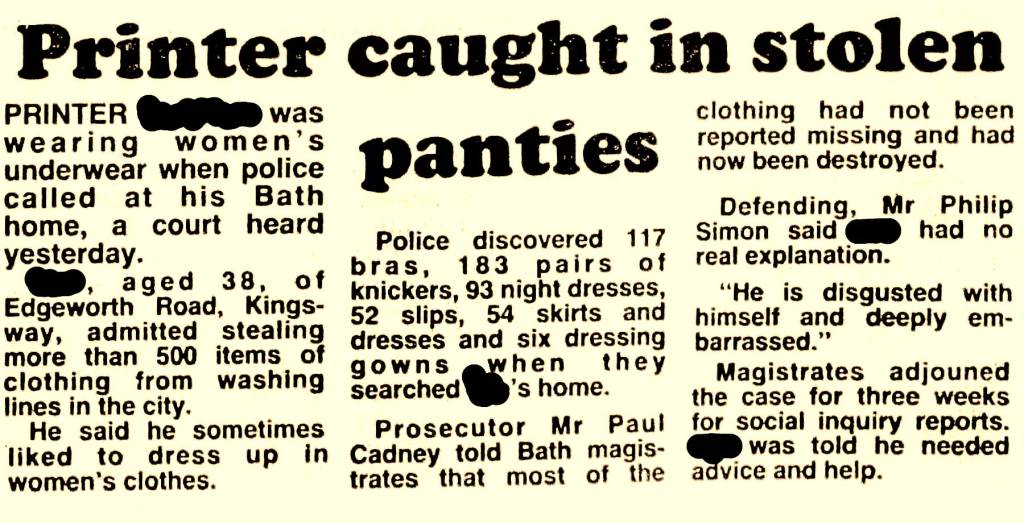
Western Daily Press; Bristol, Avon, England — September 3, 1987
Note that since the alleged perp is a printer by trade, use of Cooper Black as the headline typeface only adds to the man’s humiliation.
The New London (Connecticut) Evening Day — September 2, 1955
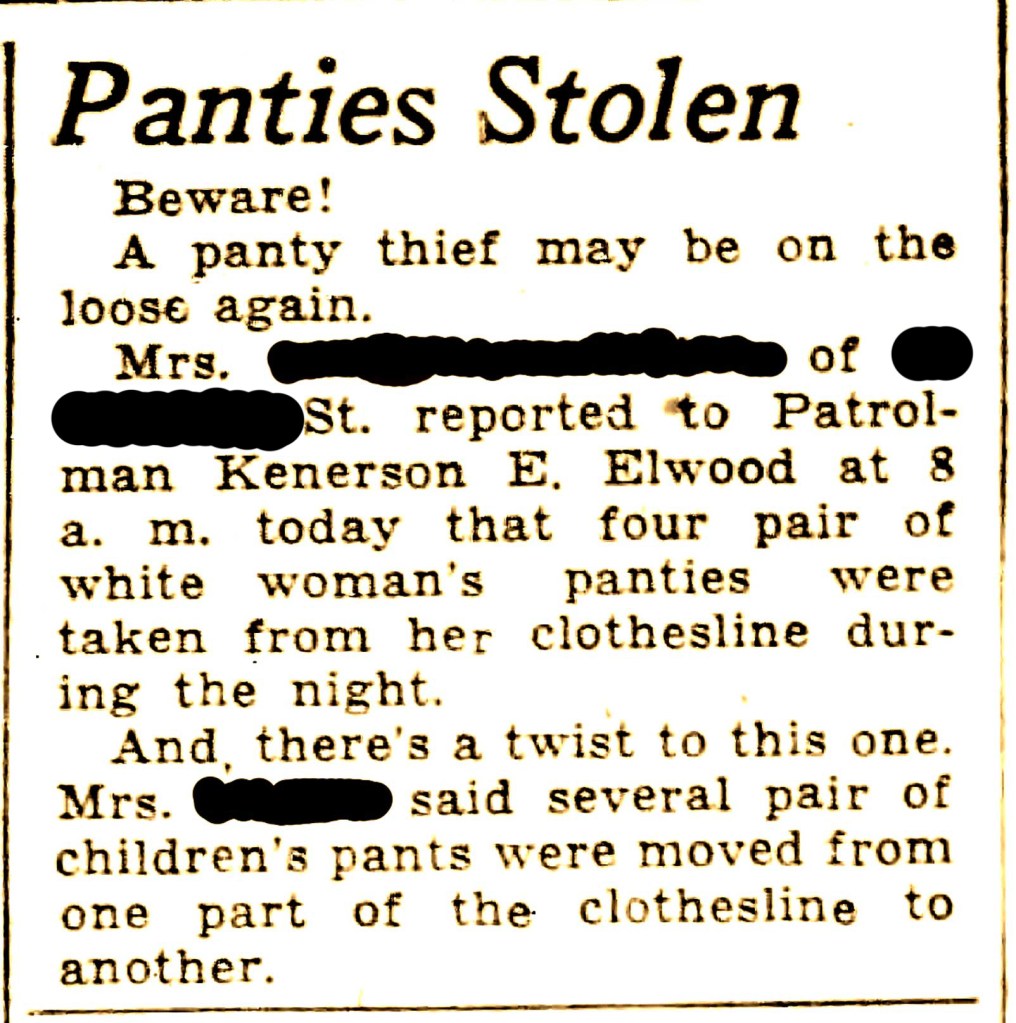
The (Scranton) Times-Tribune — August 22, 1956

Austin American-Statesman — August 4, 1962

 L.T. Hanlon