Is there any YouTube channel that does NOT use this stock music? Even more to the point, once I hear this tune, it’s worming around in my head like that thing Khan stuffed in Chekov’s ear!
Category: Movies, TV, Effluvia
Research for a never-written steamy novel
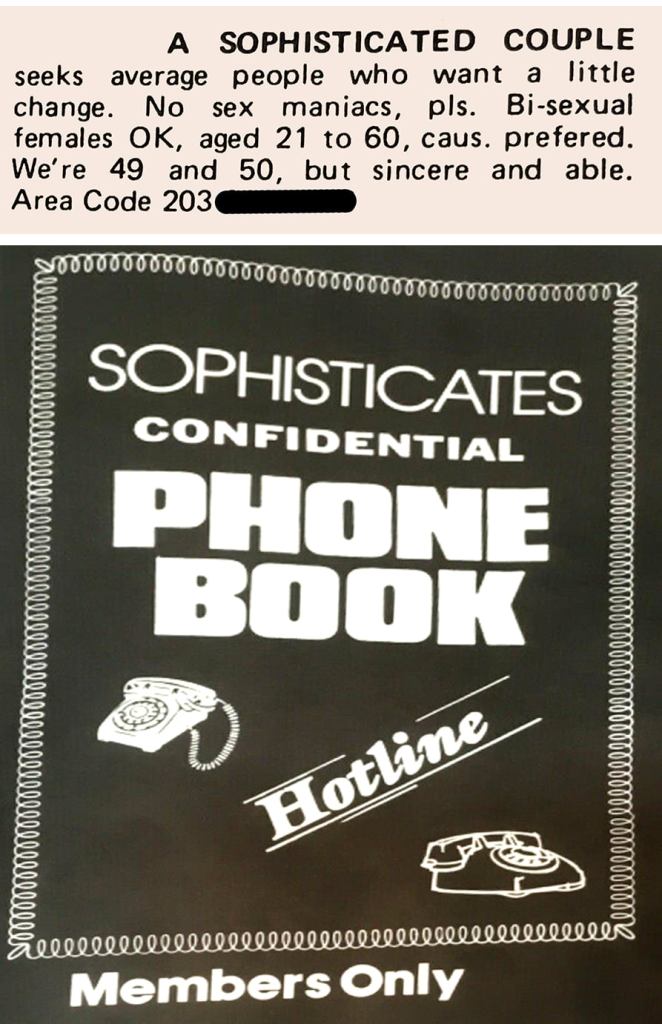
While browsing eBay for eclectic printed ephemera several years back, I spied an auction for “Sophisticates Confidential Phone Book Hotline, — Members Only” a guide for swingers that appeared to have been published in the late 1960s or early 1970s.
Intrigued, I bid and won this little book, and as I leafed through it, got the idea to pound out a steamy novel in which its ads are the basis for story arcs. Because more than a few ads mentioned meeting up in motels, I figured that could be the narrative frame.
I probably got the idea of the setting from the 1987 TV movie “Bates Motel” in which Bud Cort portrays a guy who befriended Norman Bates during their incarceration and inherits the motel when Norman dies. The movie was a pilot for a series, I think.
OK, so I had the sexy stories and the motel setting, but the story needed a better overall theme.
While watching a documentary about Julius and Ethel Rosenberg, more inspiration struck: What if a sleazy motel on a busy tourist highway is run by Russian agents whose job is to get blackmail material on anybody and everybody who checks in?
Here’s the brief description of “No-Tell Motel” that I came up with, including ideas for the first three chapters . . .
In the sultry backdrop of the early 1960s, along a bustling tourist highway, lies the enigmatic No-Tell Motel. Hidden behind its kitschy facade, this ordinary lodging is a hotbed of secrets and seduction, its true purpose concealed to all but its cunning owners — the enigmatic couple, Viktor and Natalia Ivanov, who double as covert Russian agents.
Viktor, a dashing and charismatic figure with piercing blue eyes and a disarming smile, manages the motel with an air of charm that conceals his true intentions. Natalia, his captivating and mysterious wife, exudes allure with her fiery red hair and a demeanor that masks her covert skills. Together, they form a formidable pair, using their unique talents to exploit unsuspecting guests who answer the siren call of their strategically placed ads in swinger magazines.
Chapter 1: “The Honeytrap” — When a high-ranking government official checks into the No-Tell Motel, Viktor and Natalia see an opportunity too good to pass up. As an alluring duo seeking a thrilling night, they draw the official into their web of temptation. Little does he know that their passionate encounter is meticulously recorded for future leverage. As the night unfolds, the couple realizes that emotions are entangling them in unexpected ways, leading them to question the true nature of their mission.
Chapter 2: “The Actress and the Diplomat” — When a glamorous Hollywood actress, Grace Harper, and a dashing foreign diplomat, Alexei Volkov, simultaneously check into the No-Tell Motel, Viktor and Natalia find themselves in a complex web of desire, ambition, and political intrigue. Drawn to each other like moths to a flame, Grace and Alexei’s clandestine affair takes center stage while the Ivanovs gather compromising information to exert influence over these influential players. But as emotions intensify, loyalties blur, and the line between duty and passion becomes dangerously thin.
Chapter 3: “The Double Agents” — An unexpected twist of fate reunites Viktor and Natalia with two familiar faces from their past – fellow Russian agents posing as a married couple, Yuri and Irina Petrov. As the two couples join forces to extract critical information from a renowned scientist staying at the motel, tensions run high, and old wounds resurface. Betrayals and revelations from their shared history threaten to derail the mission and put everyone’s lives at risk. Amid the steamy encounters and high-stakes espionage, the true test of loyalty and love emerges, forcing the characters to confront their deepest desires and darkest secrets.
“No-Tell Motel” weaves a tale of seduction, espionage, and forbidden wants against the backdrop of the tumultuous 1960s. In a time of shifting allegiances and political intrigue, Viktor and Natalia must navigate the dangerous game of espionage while wrestling with their emotions. As they delve deeper into the lives of their guests, they must confront the moral ambiguity of their actions, leading to a heart-pounding climax that will leave readers breathless and longing for more.
However, I decided that Joe Weisberg executed the basic idea much better with “The Americans,” so I abandoned the project.
‘Strange New Worlds’ sets phasers to ‘cringe’
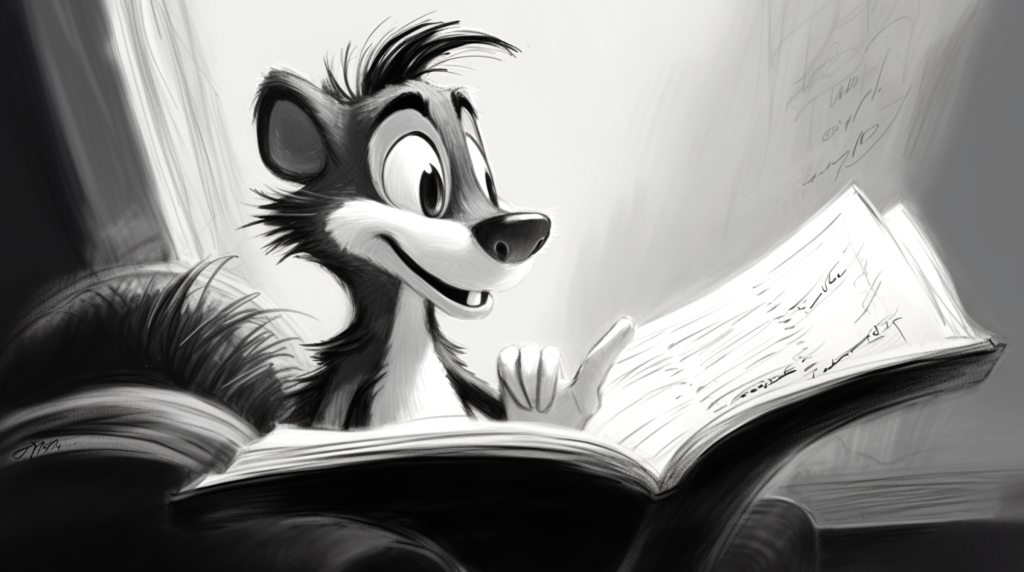
The deadly pandemic known as “crossoveritis” has struck the “Star Trek” franchise again — and given me my most severe case of vicarious embarrassment since “Stargate SG-1” invoked Gerry Anderson.
I sit agog at the sheer audacity of the “Star Trek” franchise to pull this stunt. It’s akin to the ludicrous episode “200” from “Stargate SG-1” — the one that makes you want to teleport yourself into another galaxy, preferably one without cable.
“Star Trek: Strange New Worlds,” for the unfamiliar, is the nostalgia-fueled, good-ship-lollipop revival of Captain Pike’s pre-Kirk adventures.
“Star Trek: Lower Decks” is what you get when you mate “Star Trek” with “Rick and Morty” — a projectile vomit-inducing cartoon for the hyper-caffeinated.
Combine the two in the episode “Those Old Scientists“? It’s like blending champagne with Red Bull: a waste of good champagne and a misuse of Red Bull.
This unholy crossover is the equivalent of forcibly beaming the Starfleet Academy into an interstellar clown college. I don’t know who in the production team thought turning our beloved, serious sci-fi characters into comedic cartoons was a good idea.
Are we so desperate for laughs in the grim vacuum of space we must resort to such abominations?
“Strange New Worlds” was barely hanging on by the thread of nostalgic fanboy/girl hope, but this crossover might as well have been a phaser set to kill, aimed straight at the integrity of the series.
And “Lower Decks”? The original premise was as slippery as a Ferengi businessman — the humorous underbelly of “Star Trek”?
Please. It’s like someone looked at the underappreciated maintenance crews and thought, “You know what would make this better? Caricatures and slapstick!”
“Stargate SG-1” had its Supermarionation embarrassment, sure, but at least it had the decency to return to its senses in later episodes. “200” was a fever dream from which we thankfully awoke.
But our dear Starfleet seems to have lost its way in this cartoon cosmos, with no signs of a course correction.
I swear, if this is the trajectory of “Star Trek’s” future, I’d rather watch a Klingon log-rolling competition. At least that would involve real logs and real danger rather than this watered-down, Saturday-morning-cartoon-esque disgrace that we are forced to reckon with.
Beam me up, Scotty — I can’t take it anymore.
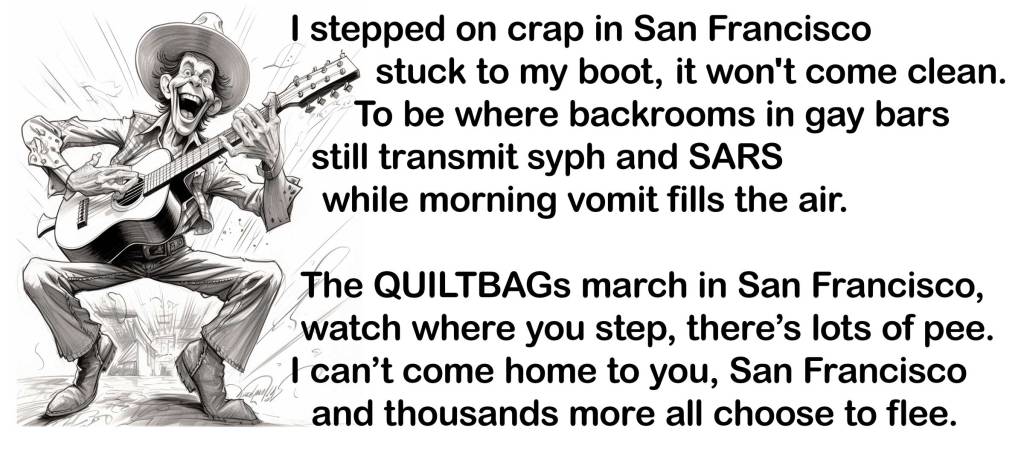
RIP Tony Bennett, so here are new lyrics
2 crazy road trips, 1 wild ride: ‘It’s a Mad, Mad, Mad, Mad World’ and ‘Honky Tonk Freeway’

In the wild ride of movie history, two films stand out. They are “It’s a Mad, Mad, Mad, Mad World” from 1963, a funny-as-hell fling from Stanley Kramer, and the darkly amusing 1981 flick “Honky Tonk Freeway” by John Schlesinger.
The first was a hit; the second a shit.
But both tell us a lot about America’s free spirit.
Both movies love the open road. The road trip, the ultimate symbol of freedom, is where all the human drama plays out. In “Mad World,” a mad dash for hidden cash is not just about the money but the journey. “Honky Tonk Freeway,” however, puts a little town named Ticlaw under the microscope, showing us a small slice of American capitalism, where an off-ramp from the freeway becomes a dream.
“Mad World” is all about how crazy people can get when there’s money involved. It pokes fun at our money-obsessed society with its colorful cast of comic stars, each showing a different side of our pursuit of wealth.
“Honky Tonk Freeway,” though, takes a different angle. It’s like a wild photo of 1980s America, full of excess. Ticlaw is a small town chasing after every tourist buck it can, even if it means selling its soul. It’s a funny but sad comment on how far we’ve taken the American Dream.
These two movies meet at the intersection of comedy and critique. They use the ridiculous to show us the real. If “Mad World” offers the mad rush after World War II to get rich, then “Honky Tonk Freeway” laughs at the neon greed of the ’80s. They’re like funny pictures of their time, showing us that the American Dream is often a wild chase after nothing.
But here’s the thing: Even while they’re poking fun, these movies still show love for the American Dream. They’re not making fun of the dream but how silly we can get about it. Both find humor in our mistakes and show that we never give up trying for something better. They’re not mean, but a therapy: laughing at ourselves helps us understand ourselves.
“It’s a Mad, Mad, Mad, Mad World” and “Honky Tonk Freeway” take a good, hard, but loving look at America and our love for the open road.
By showing us the human spirit chasing after success, they reveal our shared journey’s funny and silly side. So as we keep traveling our roads, let’s remember to laugh at the side trips, respect the speed bumps, and enjoy the wild show that is this crazy, crazy, crazy, crazy world.
Hey, y’all! It’s real-life ‘GTA’ in Arkansas!

In an exciting example of the power of a positive public image, the Arkansas State Police have become online stars.
An assortment of YouTube videos features the state’s troopers immersed in law enforcement. These videos, offering an unfiltered perspective, provide a far more intricate view than popular TV programs such as “Cops.”
The videos, which seem to have been made accessible via Freedom of Information Act requests or, perhaps, a deliberate public communication plan, apparently are compiled and posted by YouTube channel owners, not Arkansas officials.
Among these videos, the high-speed pursuits grab viewers’ attention. Many conclude with a trooper skillfully executing a Precision Immobilization Technique (PIT) or a Tactical Vehicle Intervention (TVI), successfully forcing fleeing vehicles off the road.
Trooper Jacob Byrd, affectionately known as “The Byrdman,” has earned praise from viewers for his impressive maneuvering. The guy’s an online phenomenon.
Naturally, the question arises: Why do drivers risk trying to evade law enforcement?
Outstanding warrants or legal issues — Individuals with existing warrants or legal issues might try to flee to avoid immediate apprehension.
Carrying illicit substances or objects — Those involved in unlawful activities or transporting illegal goods or substances might try to outrun law enforcement to avert detection and possible prosecution.
Lack of proper documentation — Drivers without valid licenses, insurance, or vehicle registration might try to escape, hoping to sidestep penalties for these infractions.
Impaired judgment — Substance abuse can lead to poor decision-making, and inebriated drivers may irrationally evade the police.
Fear or panic — Basic fear or a sudden panic response could cause a driver to flee the scene after spotting law enforcement.
They’re idiots — If you’re like me, you’ve long concluded that although people are basically good, they’re basically stupid. Don’t believe me? Just look around you. (I’ll wait.)
The world of high-speed police pursuits does carry a certain level of excitement. Who hasn’t been riveted while watching a car chase unfold in a film or broadcast live on TV? It’s akin to a high-stakes chess game on wheels, where every tactical move and countermove has immediate, real-world consequences.
It isn’t hard to believe that some police officers might even feel a grudging respect for the driving abilities of these audacious motorists, much like a seasoned athlete might respect a formidable adversary.
However, remember that while these situations might provide compelling action movie scenes or gripping news footage, they unfold on actual streets among real individuals. The risk factor is high, and law enforcement’s primary goal remains to ensure public safety.
In one Arkansas State Police video, after a suspect is pulled from his high-performance car, he declares: “I’m just saying I could’ve had y’all. Yeah, that was fun, though, wasn’t it?”
The troopers assure him it was not.
Suggested YouTube channels
Who needs human writers? AI creates a sitcom

Everybody knows how much respect I have for Hollywood’s creative minds. The last thing we want to have happen is for this actors and writers strike to deprive the world of the original, fresh, creative ideas flowing from the business end of that woke firehose.
So, I gave ChatGPT the following prompt:
Create a 500-word pitch for a 30-minute sitcom designed to appeal to today’s streaming-content audiences. Include a diverse cast and suggest some culturally sensitive comedic situations.
The GPT-4 model came up something pretty good. Check it out:
Imagine the classic sitcom setup with a fresh, millennial-driven twist: “Eco Heights” is a delightful 30-minute sitcom designed to encapsulate the challenges and rewards of urban eco-living in today’s fast-paced, tech-centric world.
The plot revolves around an eclectic group of tenants who, united by their commitment to sustainable living, have moved into an eco-friendly, intelligent apartment complex named “Eco Heights.” With high-speed Wi-Fi running on solar power, communal vegetable gardens on rooftops, recycled water systems, and a sharing economy that even includes clothes, this setting brings unique trials, tribulations, and comedic moments. The humor emerges from the residents’ struggle to balance their desire for a low-impact lifestyle with the realities of living in a modern, connected world.
Our central character, Alex, is an enthusiastic but socially awkward tech innovator who has launched a green start-up. Alex’s struggle to connect with people and navigate the dating scene, combined with the effort to keep his fledgling business afloat, creates comedic gold.
Next, we have Mona, a fiercely independent, wise-cracking woman in her late 50s who practices yoga and adheres to a strict vegan lifestyle. Mona was a corporate executive before turning to sustainable living, leading to hilarious clashes between her business-minded past and her new green-lifestyle aspirations.
Other tenants include Gabriel, an Afro-Latino gay man known for his culinary experiments with organic food, often leading to kitchen disasters, and Jin, an Asian-American punk-rocker turned bicycle repair enthusiast, trying to go car-free in the city.
We also have Nadia, a Middle Eastern single mother and dedicated compost enthusiast, striving to raise her 8-year-old, tech-addicted son, Loomis while trying to teach him the benefits of sustainable living. The dynamic between Nadia’s traditional parenting and Loomis’ tech-centric world offers humor and relatability for a generation bridging two eras.
A regular character is Ravi, an Indian software engineer who lives virtually, constantly creating new apps to help manage the apartment’s eco-system, with often comically disastrous results.
Finally, the overly ambitious and slightly eccentric building manager, Susan, continuously tries to start new, sometimes unfeasible, eco-initiatives leading to a fair share of laughter.
“Eco Heights” delves into timely and culturally sensitive themes through a comedic lens. It explores the intersections of technology and sustainability, generational and cultural gaps, modern dating in a tech-centric world, and our struggle to balance our desire for convenience with our commitment to the planet.
Each episode features comedic situations, such as a fight over sunlit areas for solar charging, an unexpected mix-up in the clothing share library, misunderstandings about compost etiquette, or the absurdity of a silent disco powered by pedal electricity.
With its diverse cast and focus on eco-consciousness, “Eco Heights” offers a humor-filled reflection of our times, inviting the audience to laugh at our collective quirks while subtly raising awareness about sustainability. Its modernity, diversity, and cultural sensitivity make it a perfect fit for today’s streaming-content audiences.
AI steering humans into the future
Do you recall the tales of awe and surprise at the first sighting of an automobile?
This once revolutionary technology, commonplace today, utterly transformed the world. Much like the horse-drawn carriage being superseded by the car, another significant shift is on the horizon — the rise of artificial intelligence.
Just as automobiles reshaped society, reducing distances and speeding up life, AI promises to impact our world on an even grander scale. It is poised to liberate us from mundane tasks and challenge intricate problems beyond our current capacities.
Consider this: Cars granted us an unprecedented level of freedom and mobility. Similarly, AI stands to provide an intellectual liberation, taking over routine tasks and opening up time and space for human creativity and innovation. From advanced healthcare research to tackling climate change, AI is gearing up to address some of our most pressing issues.
However, like every tool, its benefit is contingent upon its use. If guided appropriately, AI can transport us to a future where we can focus on enriching the human experience, unburdened by monotonous chores or daunting problems. The journey to this future promises to be as transformative and exhilarating as the advent of the automobile.
So, prepare for an exciting ride — AI is at the wheel!
In “The Magnificent Ambersons,” Eugene Morgan reflects on the automobile’s impending legacy. This 1942 film is based on the book published in 1918.
Kerouac and Newman: Hot then, hot later?
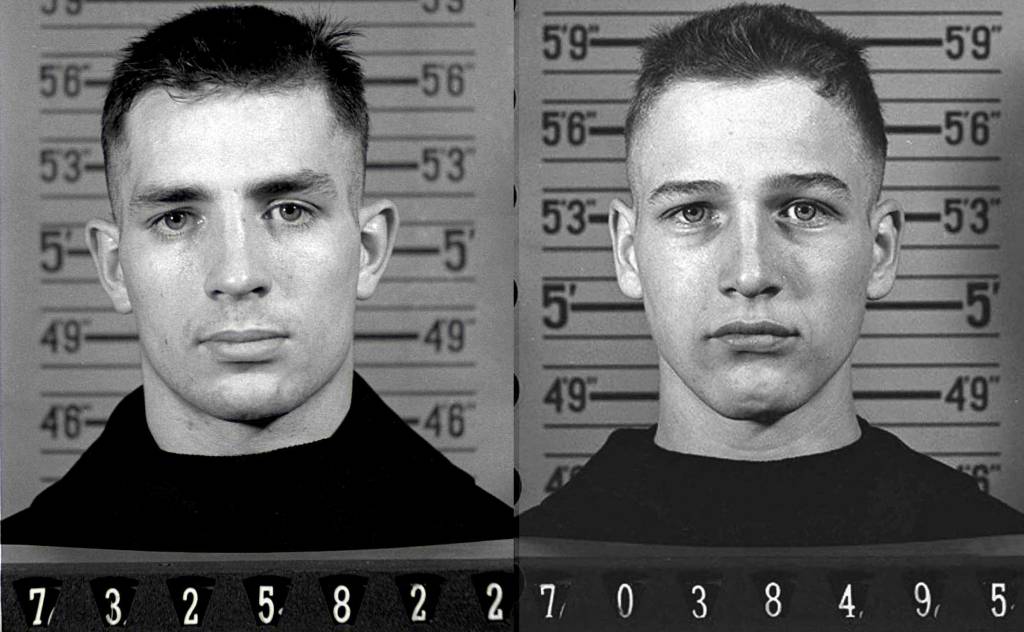
I’ve recently noticed a continuing stir online over some old Navy induction photos of Jack Kerouac and Paul Newman from the 1940s.
People are losing it over how hot these two dudes look, which got me wondering: Were they that good-looking, or do they seem more desirable because they became famous in later years?
Beauty is a tricky thing; it changes with the times. In the ’40s, men were expected to be clean-cut and rugged, like the all-American boy next door. And Kerouac and Newman were all that and more. Looking at these photos, I can see why folks back then would have swooned over them.
But here’s the thing — we’re also being influenced by what we know about these guys now. It’s like this thing called the halo effect. We’re more inclined to find them attractive because they’re famous, and we know of their achievements later in life. Kerouac became the voice of the Beat Generation, and Newman was not just a brilliant actor but also a great guy who did a lot for charity. All this stuff makes them look even better to us now.
So it’s a mix of both. They were handsome guys back then, but knowing what they achieved makes them even hotter. It’s remarkable how beauty isn’t just one thing; it can change with time and be shaped by our feelings.
What do you think?
Happy Fourth of July!

 L.T. Hanlon