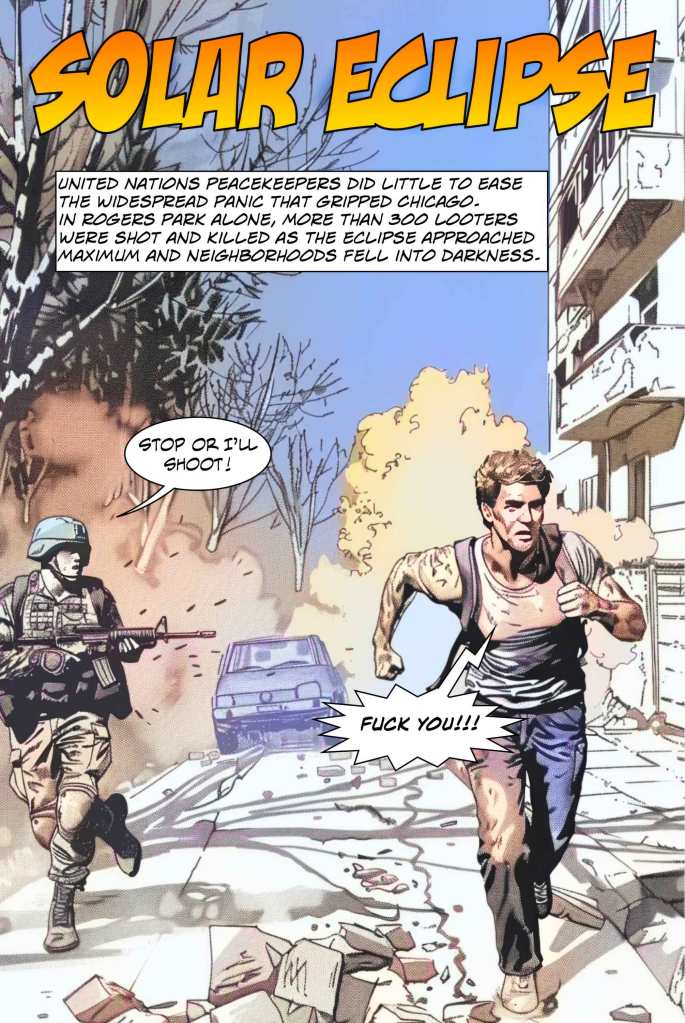
Wild in the streets of Chicago during solar eclipse?

Ah, St. Patrick’s Day in Lincoln Park: a time of jubilant revelry, emerald-hued beer, and, as I discovered, the most bewildering bathroom antics west of the Emerald Isle. Several years ago, the Chicago Tribune’s Metromix section sent me to capture the essence of a popular nightclub’s annual celebration of all things Irish.
The evening started innocuously enough. The air was thick with the scent of spilled Guinness and the sound of boisterous toasts. Patrons, clad in varying shades of green, from neon lime to the deepest forest, danced and swayed, their movements becoming increasingly erratic as the night progressed — a testament to the barkeep’s generosity.
But the real story, the pièce de résistance of my nocturnal expedition, lurked not on the dance floor but in the men’s room. Here, in the dimly lit, questionably sanitary confines, I stumbled upon a bizarre scene that would make a leprechaun blush.
Arrayed before me, five young men stood in a circle, each with a condom in hand — or, more accurately, in use — apparently competing in some urination challenge. Yes, dear reader, you read that correctly. These lads were filling their latex vessels with a fervor typically reserved for beer pong championships.
As I stood there, one of the participants caught my eye. “Hey!” he exclaimed, his voice echoing off the tiled walls, “It’s not what you think! We’re not queer for each other — it’s just easier to fill piss balloons if you’re kinda hard!”

As Chicago grapples with winter, the performance of Chicago Transit Authority rail service during challenging weather conditions has again been scrutinized.
Despite the CTA’s extensive preparations for winter, including implementing track switch heaters, equipping railcars with sleet scrapers and snowplow blades, and deploying special “sleet trains” to remove snow and ice, there have been disruptions in service.
The most notable was the temporary suspension of the Orange Line service due to a derailment. This highlights the ongoing struggle of the CTA to maintain seamless operations during extreme weather despite their evident efforts to prepare and respond to these challenges.
The CTA’s snow-removal process, crucial for ensuring safe and accessible transit, involves a coordinated effort across different entities. While the CTA is responsible for clearing its properties, including rail stations, bus turnarounds, and transit centers, clearing bus stops and shelters often falls under the jurisdiction of local municipalities or adjacent property owners. This division of responsibility can sometimes lead to confusion and frustration among transit riders, especially when areas leading up to CTA properties are inadequately cleared.
Amid these operational challenges, the CTA continues to emphasize its affordability, positioning itself as a budget-friendly transportation option for Chicagoans. With various payment options and unlimited ride passes, the CTA seeks to offer an economical alternative to private transportation, especially for events and regular commutes across the city.
Issues faced by the CTA, particularly in weathering Chicago’s harsh winters, raise questions about the adequacy of funding, staffing, and overall infrastructure investment.
This is perplexing considering Chicago’s political alignment and historical significance, being a stronghold of the Democratic party and the home of a two-term president. The juxtaposition of Chicago’s political clout and the CTA’s struggles points to broader issues in urban infrastructure and public transportation funding.
Why, in a city that has been a significant player in national politics, does its public transportation system seem perpetually caught in a cycle of underfunding and underperformance, especially in times of need such as during severe weather events”
Sure, the CTA could improve by ensuring that all entities responsible for snow removal are perfectly synchronized — but this is beyond the agency’s power.
Therefore, it may be time for a comprehensive review of CTA funding, resources, and operational strategies, particularly in light of the recurring issues during inclement weather. Such a review could focus on enhancing coordination among various municipal entities for more effective snow removal and exploring technological innovations for better winter weather preparedness.
Further, it’s worth questioning why the CTA struggles with these recurring issues despite Chicago’s political influence. This situation could reflect a broader pattern in urban politics, where local issues like public transportation often don’t receive the attention or funding they require, despite the city’s significant role on the national stage.
In a city renowned for its political history and contributions, the state of its public transportation system seems incongruous. This paradox might suggest a need for a renewed focus on local infrastructure issues, ensuring that the city’s transportation network is robust, resilient, and adequately funded to meet the needs of its residents, regardless of the weather or other challenges.
The CTA’s struggle against Chicago’s harsh winters is not just a matter of inconvenience; it reflects deeper issues in urban infrastructure, funding, and political priorities. As residents face the brunt of these challenges, it becomes increasingly clear that a strategic overhaul may be necessary to bring about the much-needed improvements in the city’s public transportation system.
If you haven’t caught “Law Talk With Mike,” you’re missing the fun boat.
Michael J. Gravlin, Chicago’s legal YouTube maestro, turns courtroom Latin into barroom English quicker than you can shout, “Objection!” The show? Think of it as a comedy club where the American justice system is both the joke and the punchline.
“Law Talk With Mike” is one of those YouTube channels you can’t help but binge, like a “Breaking Bad” season, but with less meth and more legal jargon.
Gravlin’s channel features a compilation of proceedings from our nation’s courts. And, boy, does this guy have a knack for keeping the show rolling. Sovereign citizen starts spouting nonsense? Boom! Out comes the red fez. Something bonkers happens? It’s time for the screaming goat toy. Yeah, you heard me right, a screaming goat toy. It’s like a courtroom version of a laugh track, only always on point.
One recent episode — Gravlin titled it “Vaseline!” — had me in stitches. It involved a defendant caught doing something so embarrassing in his car, parked in a CVS lot, it’d make a Kardashian blush. Gravlin tore into the case with the snark you’d expect from a late-night host, only with a law degree.
But here’s the kicker: Gravlin’s not just some talking head. He’s built a community around these online court shenanigans. The guy’s got over 1,400 episodes under his belt and is closing in on 200,000 subscribers. And amid the humor, he provides genuine insight into the legal process in which he’s been involved as a prosecutor and a personal injury and workers’ compensation attorney.
Thanks to Gravlin’s success, he’s helped turn judges, prosecutors, and even serial defendants into minor celebrities. It’s like the Marvel Cinematic Universe, but for people who can’t fly or shoot lasers from their eyes.
The guy’s got a new episode almost every day, sometimes more. So, if you’re tired of the same old reruns and want something that’ll make you laugh, think, and occasionally cringe, do yourself a favor and check out “Law Talk With Mike.”
Trust me, it’s the kind of ride you won’t want to get off.
Walgreens at North Michigan & Chicago
October 12, 2023

I think this has possibilities.
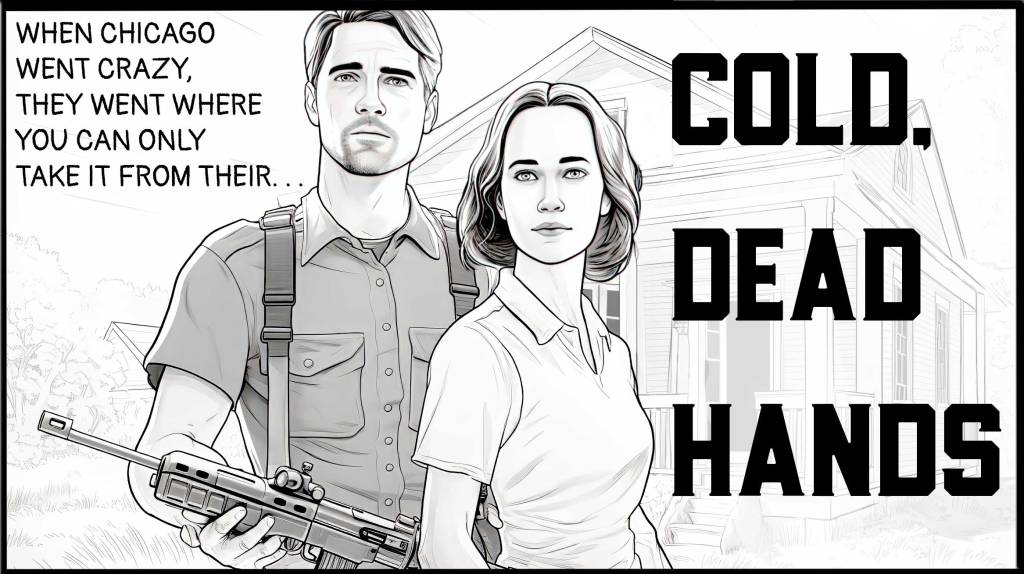
Today, a menacing spectacle of nature swept the Chicago area as severe thunderstorms unleashed their fury.
Raging showers occasionally lifted to reveal a swirling nightmare: as many as eight tornadoes were reported across the Chicago area.
From my vantage point, I saw the unrelenting spectacle unfold, my awe and fear intermingling.
The tornado sirens pierced through the chaotic weather soundscape, their eerie wails heralding impending disaster like Morlocks calling Eloi to dinner. They seemed weird, unearthly – akin to a mournful cry from another world, broadcasting a clear message: seek shelter; danger is imminent.
The sirens’ haunting resonance became the city’s heartbeat, lending a surreal rhythm to the scene. A chorus of warnings and despair reverberated through the windswept town, adding a minus undertone to the day’s frightening spectacle.
Tornado sirens are genuinely a reminder of the fragile boundary between civilization and the raw power of nature.
Have you witnessed a tornado? Been in one?

Well, folks, it’s almost time to roll out the red carpet — scratch that, checkered carpet — for the NASCAR Chicago Street Race.
Isn’t it grand? This weekend, dozens of good ol’ internal combustion chariots will roar through our streets, their finely tuned engines belching plumes of hydrocarbons like there’s no tomorrow.
Folks, Chicago’s air quality this week is already making the Great Chicago Fire of 1871 seem like a fondly remembered barbecue. The smoke might have been thick back then, but at least it wasn’t laced with enough pollutants to choke a horse.
And yet, Mayor Brandon Johnson, no stranger to stepping in front of a camera and spouting the latest buzzwords about climate action and environmental protection, seems to think this is all dandy.
“We must take drastic action to mitigate these threats and ensure that every Chicagoan in every neighborhood has the resources and protection they need to thrive,” he said the other day about our malodorous Canadian air.
A powerful statement, wouldn’t you say? I nearly teared up at the sincerity.
I couldn’t help but notice that the mayor’s definition of “drastic action” doesn’t seem to extend to doing anything drastic like restricting vehicle use during our current eco-crisis or nixing the NASCAR shindig.
Here we have our city’s highest official lecturing us about the environment while hosting an event that’ll contribute more to the air pollution problem in a single afternoon than my dear old Aunt Edna’s ’79 Pinto ever could.
Sure, I get it. NASCAR brings in the bucks. The tourist dollars flow. But at what cost? We’ve got kids in this city whose lungs have never known clean air — inside or outside — and we’re inviting in a pack of revved-up gas guzzlers.
So, Mr. Mayor, if your progressive rhetoric means anything, why not take a real stand?
Cancel the NASCAR Chicago Street Race.
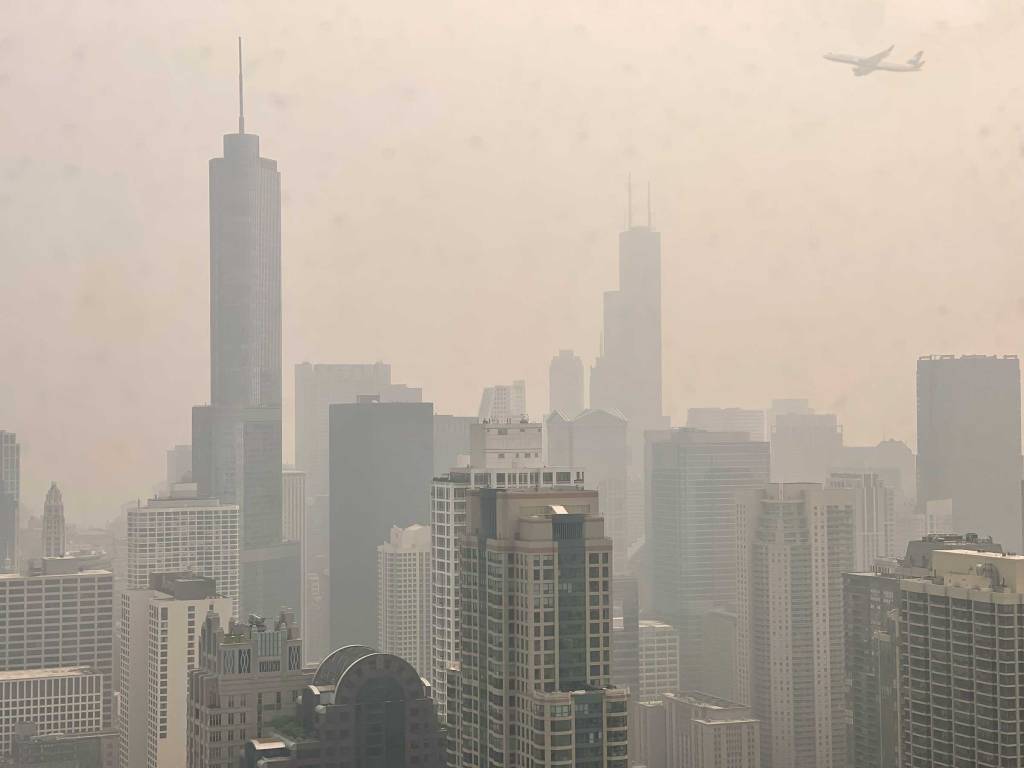
CHICAGO — Picture this: You step outside, ready to embrace a beautiful summer day in the Windy City, and you’re met with an ambiance that’s more Smokey Bear than smoky bar.
Tuesday, June 27, 2023, was such a day for Chicagoans as smoke from Canadian wildfires suffocated our beloved skyline. The Great White North’s blaze exports have turned our city into the world’s largest smokehouse. And we aren’t talking about the delectable smoke that graces our taste buds at a weekend cookout.
Arnold Coobee, a resident of the Streeterville neighborhood, summed up the situation for many of us: “My neighborhood smells awful today. The odor is like burned hotdogs.”
Poor Mr. Coobee. If only we were dealing with overcooked frankfurters, not the health hazard of wildfire smoke.
The aroma may be unpleasant, but the smoke is worse than a nasal nuisance. It’s downright dangerous. It’s like giving Mother Nature a pack of cigarettes and asking her to blow smoke in your face.
The elderly, young, and those with pre-existing health conditions are the most at risk. The air is toxic, hazardous, and in your lungs right now if you’re in the city.
So next time, dear Canada, please keep your wildfires to yourselves. We have enough to deal with without adding “respiratory health risks” to our docket.
Until then, we’ll be over here, holding our breaths and longing for the good old days of clean air and city smog.
 L.T. Hanlon